Technical standards
EN 280-1:2022 for mobile elevating work platforms: calculations, stability and testing
EN 280-1:2022 for mobile elevating work platforms: classification, structural calculations, stability, testing, instructions and document verification.
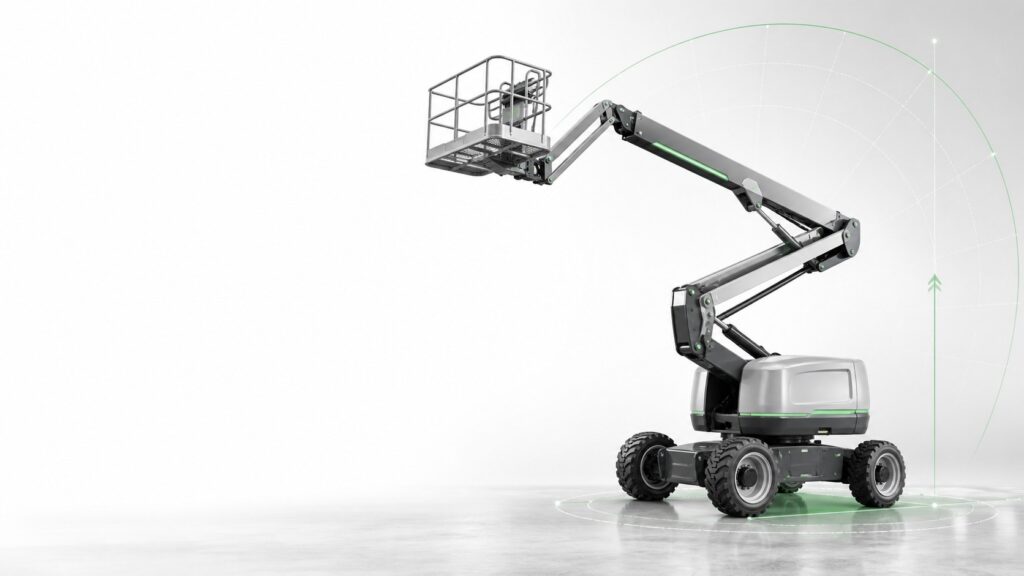
Mobile elevating work platforms (MEWPs) require rigorous technical assessment: they combine lifting people and work at height with structural, stability, control-system and environmental requirements. EN 280-1:2022 is the key technical reference for design, construction, calculations, testing and information for use.
This article does not replace the standard itself. It helps manufacturers and engineers identify the key areas to assess when designing or inspecting a mobile elevating work platform.
Scope and classification PLE/MEWP
EN 280-1:2022 standard covers mobile uplifting work platforms designed to move people to work positions from which they perform activities from the platform. The standard addresses significant hazards and risk reduction measures related to structure, stability, controls, handling, access, testing and instructions.
The classification is important because it influences requirements and evaluations. The platforms are distinguished by group and type according to the position of the centre of gravity and the conditions of translation with high platform. A classification error can lead to wrong calculation tests or hypotheses.
Structural stability and calculations
Stability is one of the central points. The manufacturer must consider nominal loads, own weights, wind, manual forces, special conditions and more unfavorable configurations. It is not enough to check the machine in a “typical” position: you need to identify the combinations that generate the minimum stability condition.
Structural calculations must also be consistent with expected loads and cycles. Arms, frame, platform, stabilizers, joints and connection points must be evaluated in relation to the stated employment scenarios, based on the data required by EN 280-1:2022. Le calculation hypothesis must be traceable in the technical file.
Control systems and safety functions
MEWP control systems must ensure predictable and safe behaviour. Platform controls, ground controls, stops, limiters and load controls must be considered. For safety-related functions it is necessary to define clearly function, safe state, activation conditions, architecture and validation. This applies even more to platforms with advanced electronics, diagnostics, sensors or automatic limitation systems.
Tests, exams and recordings
The standard provides an approach that includes project controls, manufacturing controls and tests. The tests must demonstrate stability, structural integrity, correct and safe operation of the functions and presence of the required markings/information.
It is essential to record results, configurations, test conditions, tools used and responsibility. Undocumented evidence is weak. A badly documented test can be unusable in case of contestation.
- Stability changes in the most unfavourable conditions.
- Structural and functional changes on movements, stops, limitations and devices.
- Control markings, plates, scope, warnings and information on the platform.
- Signed reports with machine identification and test conditions.
- Coherence between test results, technical file and instructions for use.
Instructions, maintenance and periodic checks
The instructions for use of a PLE must be very concrete. It must explain safe use, limits, environmental conditions, stabilization, emergencies, operator recovery, transport, storage, maintenance, checks and periodic checks. The user must know what to do before, during and after use.
Periodic checks must take into account conditions of use and frequency of use. Structure, welding, corrosion, mechanical components, hydraulics, tyres, electrical, safety devices, brakes and limiters require consistent controls. After major changes or repairs, verification must be deeper.
Frequently Errors
Technical and documentary errors can have heavy consequences in the PLE.
Grade in a superficial way group and type of platform.
Use non-consistent load hypotheses with stated use.
Do not consider wind, manual forces or unfavorable configurations.
Do not properly validate limiters and safety features.
Generic instructions for use, not specific for model and configurations.
Absence of complete records of tests and controls.
How Waves Engineering supports manufacturers
Waves Engineering supports manufacturers and technicians in drafting risk analysis and technical files for mobile work platforms, document verification, testing and support in certification with notified bodies.
Our work is to transform the standard into a verifiable path: requirements, tests, supporting evidence and documentation consistent with the actual machine.
FAQ
Is EN 280-1:2022 valid for all high platforms?
It is a reference for mobile elevating work platforms in its scope. However, each machine must be correctly framed with respect to the intended use, configuration and applicable standards.
Is the evidence of stability sufficient by itself?
No. They must be integrated with calculations, structural checks, safety functions, instructions for use, markings and technical documentation.
Should the PLE instructions for use include emergencies?
Yes. It must also provide clear instructions for recovery, emergency maneuvers, maintenance and relevant periodic controls.