International markets
Importing machinery: obligations, checks and CE compliance
Guide for importers of extra-EU machines: controls, CE documentation, responsibilities and checks before commissioning.
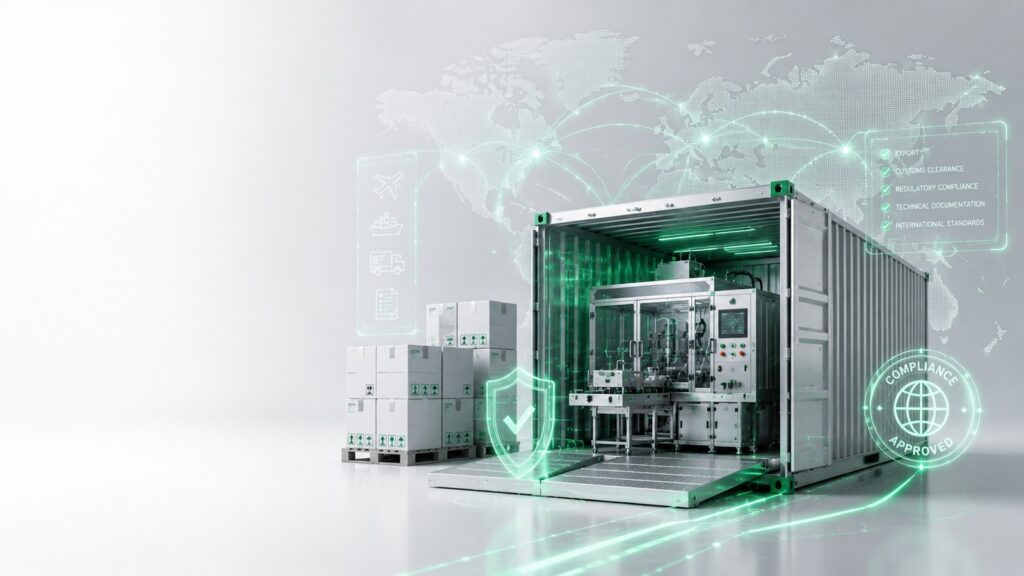
Importing machinery can be commercially advantageous, but it also exposes the company to significant technical and documentary responsibilities. When a product comes from outside the EU and is placed on the European market, the importer must verify that it complies with the applicable legislation before it is sold, made available or put into service.
The critical point is clear: if the machine is non-compliant, the problem does not remain with the foreign supplier. In many cases, the economic operator established in the European Union becomes the party from which the authorities may request documents, explanations and corrective action.
When you configure the import of a machine
Imports are mentioned when a car from a non-EU country is placed on the EU market. Not only does physical transport matter: they also count the subject that introduces the product in the market, the contractual role, the intended use and the subsequent distribution or installation.
A company that buys a machine from an non-EU manufacturer to use it in its own factory must however ensure that the product is safe and compliant. If, on the other hand, the machine is revised, integrated or marketed, the responsibilities can become even more articulated.
Because the importer has a technical responsibility
The importer must verify that the manufacturer has performed the conformity assessment procedure, prepared technical documentation, drafted the EU declaration of conformity and correctly affixed the CE marking when required. It also needs to ensure that instructions, safety information and traceability data are adequate to the target market. Reference
What to check before purchase or shipping
The best verification is that performed before shipment. Correcting a non-compliance when the machine has already arrived at the factory can generate high costs, plant stops, contractual tensions and delays in production.
- Request preliminary technical documentation to the manufacturer.
- Check declaration, instructions for use, schematics and certificates before acceptance.
- Perform a design review or a preliminary inspection in FAT phase on the machine.
- Contractually define who manages any changes required for EU compliance.
- Store all evidence in the document file of the importer or user.
Minimum documents to be checked
- EU declaration of conformity or declaration of incorporation if it is almost-machine;
- complete and translated instructions for use;
- electric scheme that must be consistent and updated with the installed;
- risk assessment or equivalent technical documentation sufficient to demonstrate the safe design and conformity assessment process;
- PL calculation according to EN ISO 13849-1;
- relevant test reports: electrical, EMC, noise, safety functions;
certificates of critical components and safety functions.
Frequently Errors
rely solely on the presence of the CE marking without checking the documentation
accept incomplete or untranslated instructions for use
do not check if the machine is a quasi-machine, a line or a set
do not check safety circuits and Performance Levels
discover after delivery that you need mechanical, electrical or document changes.
How Waves Engineering supports manufacturers
Waves Engineering supports importers, users and system integrators with document controls, design review, preliminary inspection, verification of applicable requirements and adjustment plans. The goal is to reduce the risk before shipment and build a technically sustainable import route.
FAQ
Who imports an extra EU machine must check the CE marking?
Yes. The importer must ensure that the manufacturer has correctly performed the applicable obligations and that the documentation is available.
Is the declaration of conformity enough?
No. It is a fundamental document, but it must be consistent with machine, instructions for use, technical file, applied standards and tests carried out. Reference
Do you want to check the car before shipment?
Yes. Preliminary verification reduces the risk of costs and stops after the arrival of the machine in the EU plant.