Technical standards
Packaging machinery: safety, the EN 415 series and CE compliance
How to apply EN 415 series to machines to pack and manage risks, interfaces and technical documentation.
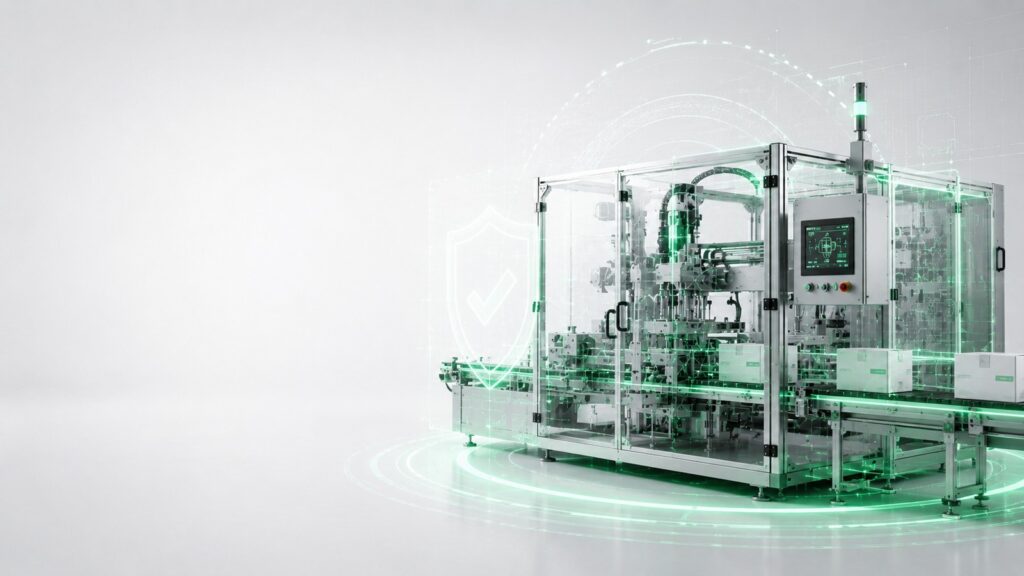
Packaging machinery is widespread across industrial automation and presents complex safety challenges. It is used in food, pharmaceutical, cosmetic, manufacturing, fruit and vegetable and logistics lines, often with high levels of automation, rapid cycles, frequent format changes and many interfaces with other machines.
Precisely for this reason safety cannot be treated as a final fulfillment. It must be integrated into machine design, risk analysis, choice of protective measures, validation of safety functions, tests and technical documentation.
EN 415 series is the main technical reference for many categories of packaging machinery. Applying it correctly allows the manufacturer to design more solid solutions, demonstrate the state of the art and, when the reference is harmonised, benefit from the presumption of compliance with the essential safety requirements covered by the standard.
Why packaging machinery are a critical safety issue
A packaging machine may seem, at first sight, a “process” machine. In reality it often contains many hazards: moving parts, rollers, ribbons, pneumatic systems, welders, blades, cutting devices, lifting systems, actuators, pliers, manipulators, robots, palletisers, storage areas and interfaces with transport systems.
The risk increases when the machine operates in an automatic line. In these cases, the operator can interact with multiple machines, multiple control panels, more emergency stops, shared access zones and protection devices that must be coordinated with each other.
What includes a packing machine
The concept of packaging machinery includes many types of products: forming machines, filling machines, sealers, packaging machinery, wrapping machines, strapping machines, multiple packaging machinery, palletizing systems, depalletization, handling and associated equipment.
Each category has specific risks. A form-fill-seal machine has different needs than a strapping machine or pallet wrapping machine. For this reason, it is not enough to call EN 415: generically, to identify the correct part of the series and to check whether, for the specific machine, there are also other standards of type B or C applicable.
EN 415: series how to use it correctly
EN 415 series must be used as a technical tool within a wider process. The starting point remains the risk analysis according to EN ISO 12100, because no C-type standard can replace the specific evaluation of the machine, its intended use, reasonably foreseeable misuse and real installation conditions.
In practice, the manufacturer should proceed as follows: correctly classify the machine, verify which part of EN 415 is applicable, integrate the general EN 415-10 part, analyze the residual risks not covered by the standard, apply the necessary horizontal standards and document all the choices in the technical file. Reference
EN 415-10 and specific parts
EN 415-10 is the general part of the series. It is particularly important because it deals with transversal requirements applicable to many packaging machinery: significant hazards, protective measures, verifications, information for use and general safety requirements.
The general part should then be coordinated with the specific part of the machine. For example, a fill-seal machine must be evaluated differently from a strapping machine, a wrapping machine or a secondary packaging system.
Operating table: main parts of EN 415 series
| Parte | Oggetto | Uso pratico |
|---|---|---|
| EN 415-1:2014 | Terminologia e classificazione delle macchine per imballare e delle relative attrezzature | Riferimento generale utile per classificare la macchina e definire il campo di applicazione. |
| EN 415-2:2025 | Macchine per imballare in contenitori rigidi preformati | Da verificare quando la macchina lavora con contenitori rigidi preformati. |
| EN 415-3:2021 | Formatrici, riempitrici e sigillatrici; riempitrici e sigillatrici | Molto rilevante per macchine form-fill-seal e fill-seal. |
| EN 415-5:2006+A1:2009 | Macchine avvolgitrici | Applicabile alle wrapping machines. |
| EN 415-6:2013 | Macchine avvolgitrici di pallet | Riferimento specifico per pallet wrapping machines. |
| EN 415-7:2006+A1:2008 | Macchine per imballaggi multipli e secondari | Rilevante per macchine per imballaggi multipli e secondari. |
| EN 415-8:2025 | Macchine reggiatrici | Nuova versione da considerare per strapping machines; attenzione alle date di effetto e transizione. |
| EN 415-9:2009 | Metodi di misurazione del rumore per macchine e linee di imballaggio | Da coordinare con i dati di emissione acustica da inserire nel manuale. |
| EN 415-10:2014 | Requisiti generali | Base generale della serie, da usare insieme alla parte specifica applicabile. |
Harmonised rules and presumption of conformity Reference
The harmonised standards published in the Official Journal of the European Union provide presumption of conformity only for the requirements covered by the standard and only if they are applied correctly. This point is decisive: writing a standard in the declaration of conformity without having actually verified it is a documentary and technical error.
The manufacturer must therefore retain evidence of the application of the standard: check-lists, dimensional checks, calculations, tests, safety circuit validations, guard assessments, photographs, schematics, instructions and technical reports. The presumption of conformity does not arise from the citation of the standard, but from its real application.
Risk analysis for machines and packaging lines
The risk assessment must consider all phases of life of the machine: transport, installation, adjustment, change format, load materials, automatic operation, interventions in jog or instructions for use, cleaning, maintenance, search faults, unblocking jams, disassembly and dismissal.
In the packaging, some operations are particularly critical: removal of jams, access to areas with moving parts, format change, cleaning of internal parts, loading coils or films, adjustment of guides, interventions on welders or blades, access to palletisers and automatic movements.
- Define intended use and machine limits.
- Identify hazards according to EN ISO 12100 and according to the applicable part of EN 415.
- Evaluate risks for automatic operation, instructions for use, regulation, cleaning and maintenance.
- Apply first intrinsically secure design measures.
- Define guards, interlocks, barriers, controls to maintained action and safety functions.
- Calculate and validate safety functions according to EN ISO 13849-1 when applicable.
- Document residual risks, warnings and procedures in the instructions for use.
Typical Risks of Packing Machines
The risks of packaging machinery depend on technology and configuration. However, some scenarios run very frequently and must be managed carefully.
crushing, shearing, dragging and entanglement on rollers, tapes, pliers and mobile groups;
- cutting and drilling on blades, opening systems, knives and cutting devices;
- burn or contact with hot parts, welders, thermal tunnels and thermoreduction systems;
- pneumatic or hydraulic risks related to actuators, cylinders and energy accumulations;
- electrical and control risks, including failures in safety circuits;
- risks during change of format, cleaning, maintenance and removal of jams;
- risks from access to robotic zones, palletisers, depalletisers and automatic movements;
- noise, vibration, ergonomics, forced postures and repetitive operations;
- risks related to packaging materials, coils, loads, unstable products or defective packaging.
Packaging lines and interfaces between machines
The most delicate point, often, is not the single machine but the line. A packaging line can be composed of multiple CE marked machines, conveyors, power systems, accumulations, robots, palletisers, electrical control panels and distributed safety devices.
When multiple machines are arranged and controlled to function as an integrated set, it is necessary to assess the risks arising from machine interactions. Regulation (EU) 2023/1230 confirms this approach: machine assemblies that work as an integrated whole fall into the machine concept and risk assessment must also include machine interactions.
Technical documentation, testing and instructions for use
Conformity of a packing machine does not close with the design of the guards. It must be demonstrated through consistent technical documentation: risk analysis, list of applied standards, safety circuit calculations, electrical schematics and tires, test reports, noise assessment, instructions for use and CE/UE Declaration of conformity.
The instructions for use is particularly important in packaging because many safe activities depend on correct procedures: material loading, format change, cleaning, regulation, removal of jams, maintenance, lubrication, sanitization, management of the DPI and access to the protected areas.
If the machine is intended for food, pharmaceutical or cosmetic sectors, additional requirements must also be evaluated: cleaning, sanitization, materials, product contamination, hygienic accessibility, drainage, residues and cleaning procedures. These aspects do not replace machine safety, but must be integrated into the project and documentation.
Manufacturers' frequent errors
apply EN 415 generically, without identifying the correct specific part
consider the machine compliant only because a component is certified
do not evaluate interfaces between machines in an automatic line
do not calculate or validate the Performance Level of safety Functions
do not document setup conditions, format change, cleaning and unblocking jams
citing harmonised standards in the declaration without technical evidence of application
do not update instructions for use and technical file after changes or line integrations
underestimate noise, ergonomics, access and maintenance.
How Waves Engineering can support you
Waves Engineering supports manufacturers and packaging machine integrators in all phases of compliance: risk analysis, identification of applicable standards, application of EN 415 series, verification of guards, calculation of Performance Level, validation of safety functions, testing, instructions for use, technical file and support to the CE marking. Reference
The value of technical support is not only “make documents”. The point is to build a consistent path between project, safety, testing and documentation, reducing the risk of disputes, testing delays, non-compliance with the end customer and late changes much more expensive.
FAQ
Is EN 415 mandatory for all packaging machinery?
No. Technical standards are generally voluntary, but when they are harmonised and applied correctly they provide compliance presumption for the covered requirements. In practice, for a packaging machine manufacturer, EN 415 series is often the most important technical reference to be checked.
Just apply EN 415-10 to declare a packaging machine compliant?
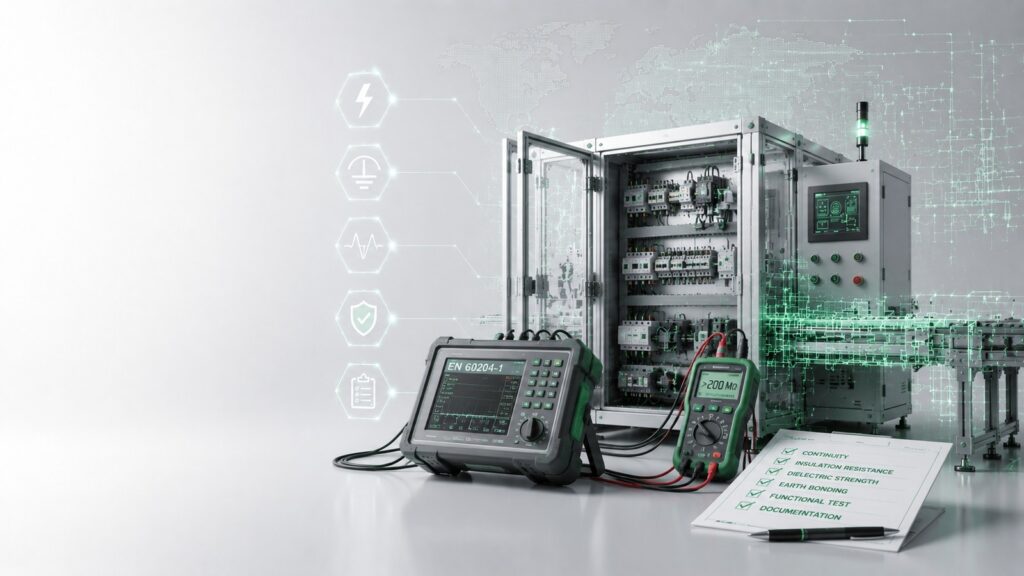
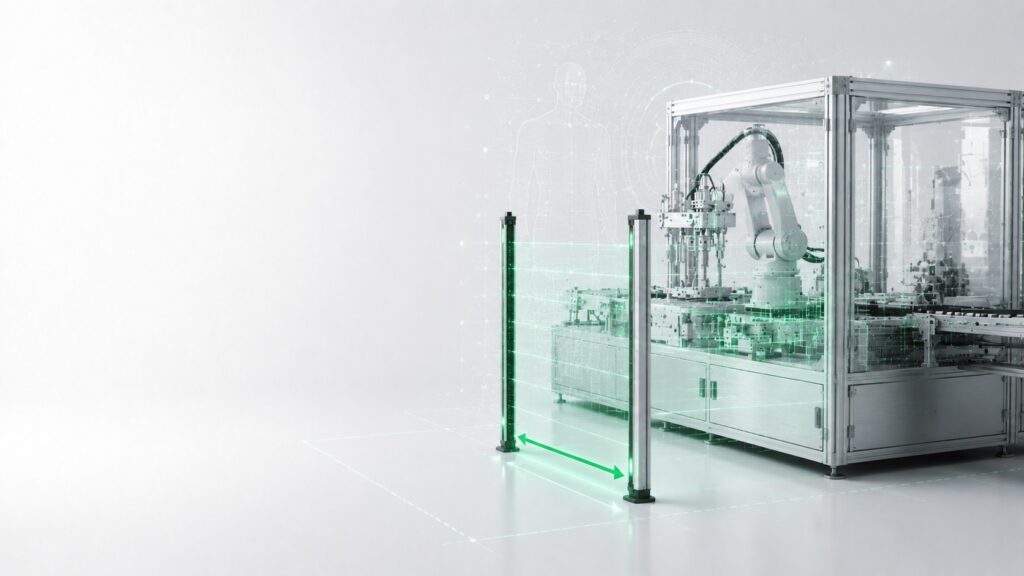
No. EN 415-10 is the general part. It must be coordinated with the specific part applicable to the machine and with the risk analysis EN ISO 12100. Inplus, other standards such as EN ISO 13849-1, EN 60204-1, EN ISO 14120, EN ISO 14119, EN ISO 13855 and EN ISO 13857.
A packing line consisting of multiple CE machines should be marked again?
It depends on integration. If the machines are assembled and controlled to function as an integrated set, an evaluation of the line risks is required and a CE marking of the whole can be required, with consistent technical documentation.
What are the most frequent risks in packaging machinery?
The most frequent risks are crushing, shearing, dragging, cutting, burns, access to moving parts, pneumatic, electrical, ergonomic, noise and risks during change format, cleaning, setup and clearing jams.
Can Waves support both single machine and full line?
Yes. Waves Engineering can intervene on a single machine, partly completed machinery, line integration or revamping, checking risk analysis, safety functions, technical documentation, instructions for use and EU conformity.