Testing and verification
Sound pressure and sound power: differences, measurement and machinery compliance
Difference between sound pressure and sound power and why they are important to declare the noise of the machines.
Sound pressure and sound power are two different quantities. Confusing them easily leads to errors in measurement reports, noise emission declarations in the instructions for use and technical evaluations required for machine compliance.
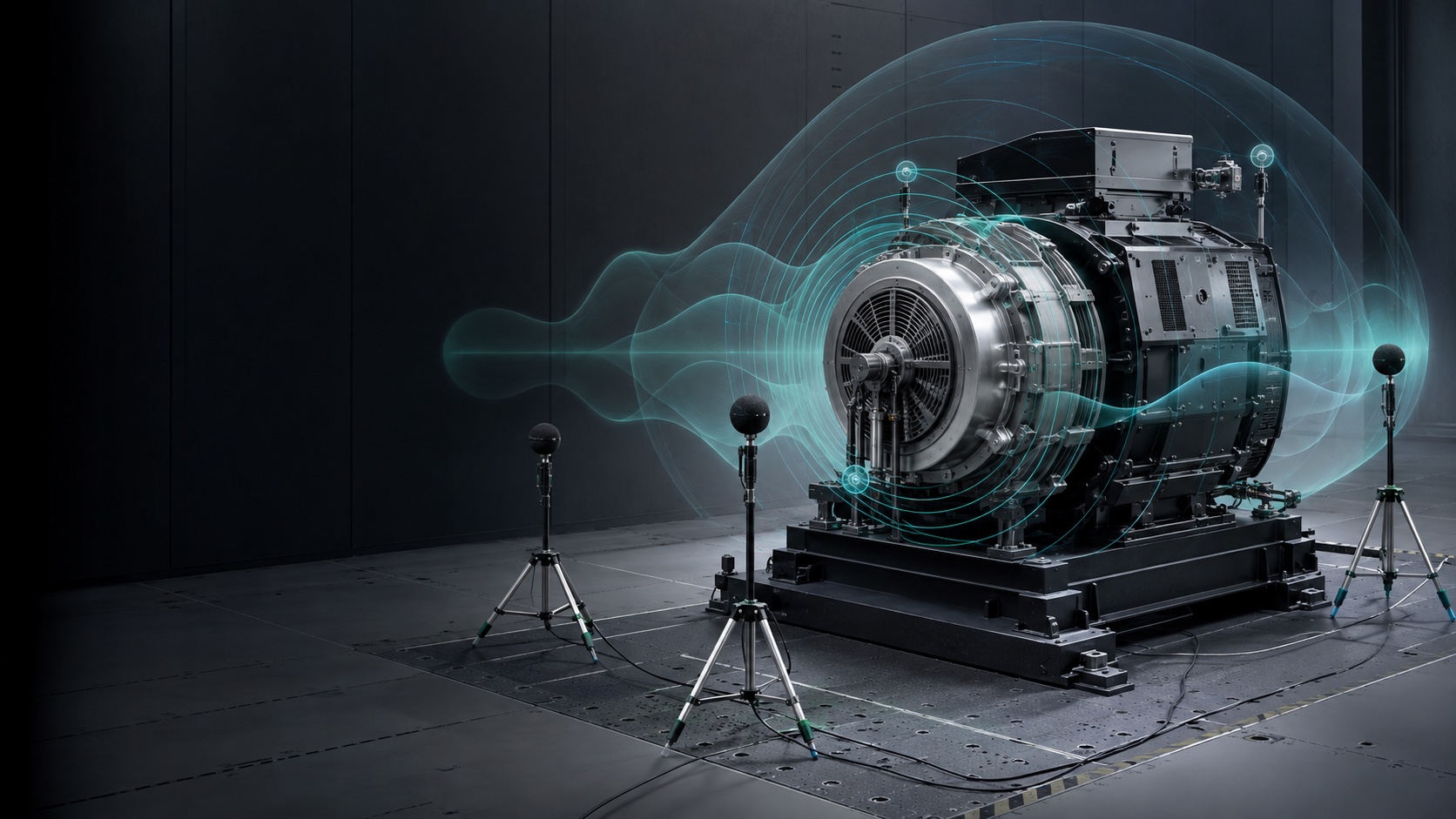
The sound pressure describes what is measured at a point of space. The sound power instead describes the acoustic energy emitted from the source. In other words: pressure also depends on distance and measurement environment; power is a feature more directly associated with sound source.
Because they don't get confused
A measured pressure level near the machine cannot be directly compared with a measured level at different distance or in a different environment, if the test conditions are not declared. The sound power, however, requires a more structured calculation or measurement procedure and allows a more general characterization of the source.
What is the sound pressure level
The sound pressure level represents the variation of air pressure generated by the sound wave at a precise point. For this reason it must always be connected to the measuring position: operator place, distance from the machine, height, configuration and operating conditions.
What is the sound power level
The sound power level represents the acoustic energy emitted by the source per unit of time. It is not measured by a simple punctual reading of the phonometer: it is determined by normalized methods, often starting from pressure levels measured on a measuring surface or by specific methods provided by the applicable standards.
When used in machine compliance
For machine documentation, the manufacturer must declare sound emissions according to the applicable requirements. Acoustic data must be consistent with the actual conditions of the machine and with the methods of measurement provided by the relevant technical standards.
When the sound pressure level exceeds certain thresholds, it may also be necessary to indicate the sound power level. The choice of the method is therefore not completely free: it depends on machine, operator workstations, measured levels and applicable standards.
Measurement methods and operating conditions
ISO 11200–11205 address emission sound pressure measurements, while ISO 3740 provides guidance on selecting basic standards for determining sound power. The applicable method, edition and any EN adoption of the selected standard must be checked. The procedure must specify machine configuration, operating conditions, test environment, integration time, measurement positions and measurement uncertainty.
- Define the representative operating scenario.
- Identify operator workstations or measuring positions.
- Choose the applicable measurement standard.
- Perform reliefs with adequate and calibrated instrumentation.
- Produce a repeatable and consistent report with instructions for use and technical file. Reference
How Waves Engineering supports manufacturers
Waves Engineering performs and coordinates acoustic tests for machines and plants, preparing technical reports that can be used for instructions for use, technical file and conformity assessments. The goal is to avoid generic declarations and provide correct, clear and defensible data.
FAQ
Does sound pressure depend on distance?
Yes. For this reason it must be declared together with the position and the measurement conditions.
Does the sound power measure with the phonometer at one point?
No. It requires a normalized method that characterizes the source, often from multiple pressure measures or specific procedures.
What's the value in the instructions for use?
It depends on the measured levels and the applicable requirements. Data, operating conditions, method and uncertainty must be indicated when required.