Testing and verification
Machinery noise emissions: the manufacturer’s responsibilities
How to measure, manage and declare the noise emission of the machines in technical documentation and instructions for use.
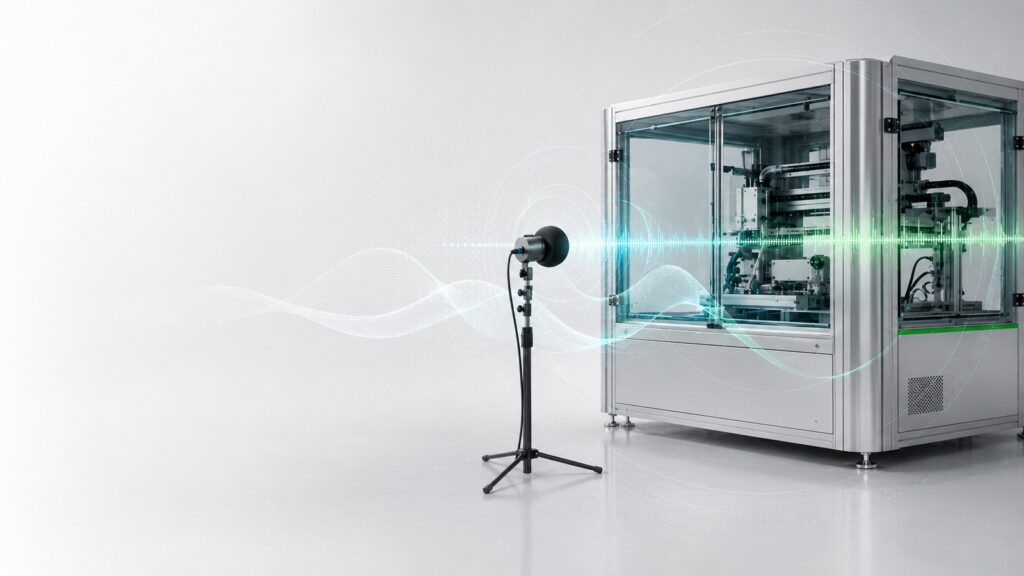
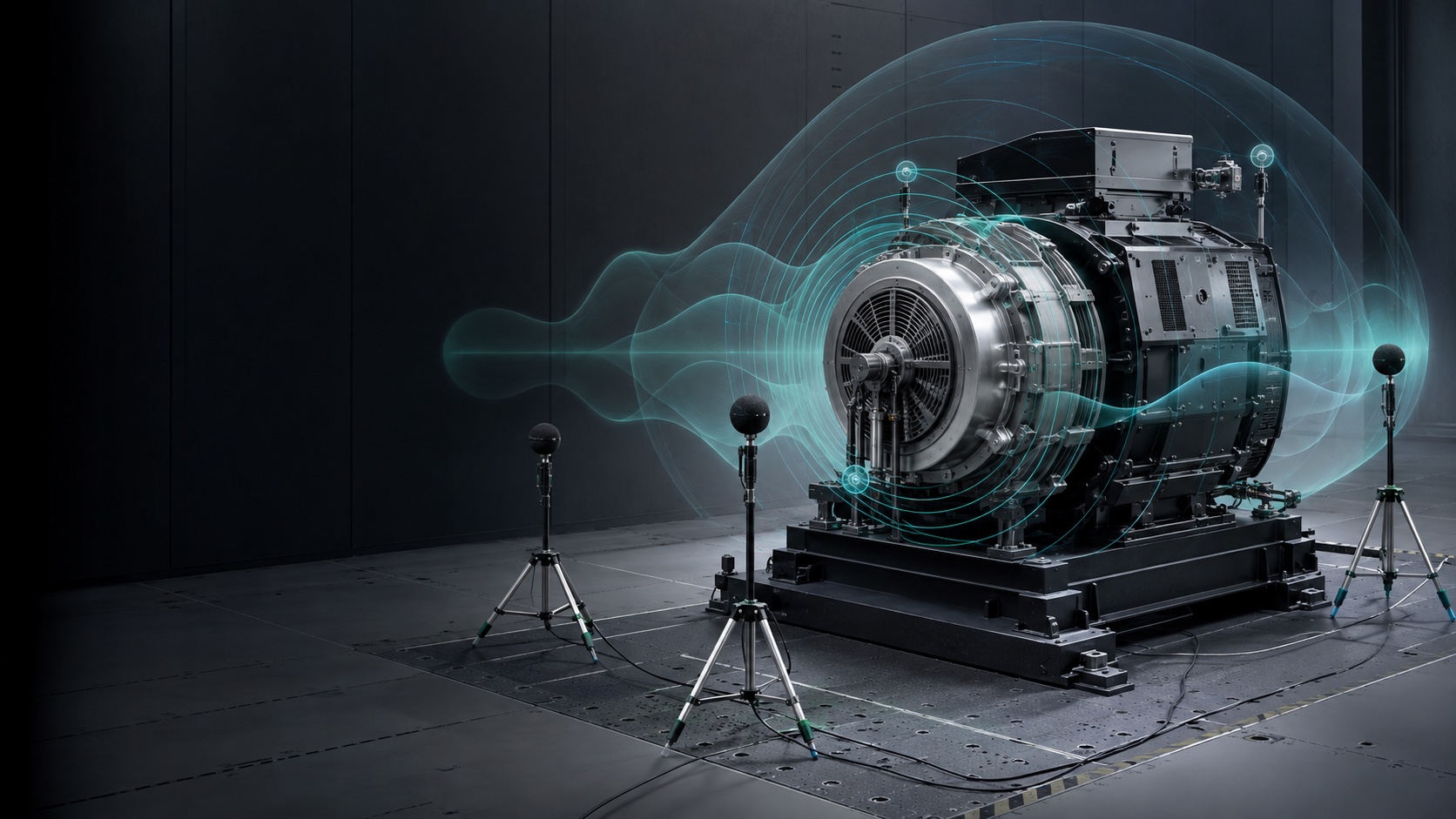
Machinery noise emission is frequently misunderstood in industrial product conformity. The manufacturer must not only “measure noise”: they must address it during design, reduce it as far as technically possible, measure it using an appropriate method and declare it correctly in the instructions for use. Reference
The acoustic data becomes part of the technical quality of the machine and its safety documentation. An imprecise report or a generic statement in the instructions for use can create problems during testing, customer dispute or verification by the authorities.
Product emission and operator exposure
The first distinction is fundamental: noise emission is a characteristic of the machine; the exposure to noise concerns the operator in his working environment and depends on time of use, distance, number of sources, environment, job and organisation of work.
The manufacturer must provide the emission data of the machine. The employer will then use this information, along with the actual conditions of use, to assess the exposure of workers.
Noise in machine design
Noise must already be treated in risk analysis. If a machine generates high levels, the manufacturer must assess reduction measures at source, interventions on noisy components, shielding, cabins, installation and maintenance procedures, as well as information to be supplied in the instructions for use. Reference
What to declare in the instructions for use
The instructions for use must state the noise emission values required by the applicable legislation. In particular, they must declare the A-weighted emission sound pressure level at workstations when it exceeds 70 dB(A), or state that it does not exceed 70 dB(A); the C-weighted peak instantaneous sound pressure value when it exceeds 63 Pa; and the A-weighted sound power level when the A-weighted emission sound pressure level at workstations exceeds 80 dB(A).
When the sound emission values are indicated, the uncertainties, the operating conditions of the machine during the measurement and the method used must also be reported. If the operator workstations are not defined, it is necessary to indicate consistent and repeatable measurement positions.
How to set a phonometric report
- Define machine, configuration, accessories and work cycle tested.
- Identify operator workstations or measuring positions.
- Choose the applicable measurement method.
- Describe environment, instrumentation, calibration, duration and operating conditions.
- Report results, uncertainty, any corrections and conclusions.
- Integrate the values into the instructions for use and store the report in the technical file. Reference
Frequently Errors
declare “noise less than 70 dB(A)” without specifying position or method
measure the machine in non-representative conditions
does not indicate uncertainty and operating conditions
confuse machine emission and operator exposure
do not update data after significant design changes
do not keep the phonometric report in the technical file.
How Waves Engineering supports manufacturers
Waves Engineering supports manufacturers in the complete management of noise emission: analysis of the requirement, definition of the measurement method, noise measurements, technical reports, instructions for use integration and insertion of evidence in the technical file.
FAQ
Is there a maximum noise limit in the Directive or in the Machinery Regulation? Reference
In general, the text requires reducing noise at source and declaring emission values, but does not set a single general maximum limit valid for all machines.
When do I have to declare the sound power?
When the weighted sound pressure level A to the workplace exceeds 80 dB(A), except for specific cases or other applicable standards.
Does the phonometric report have to be in the technical file?
Yes, the report is technical evidence of the measurement and is useful to demonstrate the correctness of the values stated in the instructions for use.